

Defiantly Human
On a founders’ dinner I can’t stop thinking about, the goddess this newsletter is named for, and the spaces we will build to feel human again.

It was the kind of restaurant where the lighting is engineered to make everyone look like the best version of themselves, where the waiters appear at your elbow before you know you need them, and the room hums at exactly the volume that lets three people talk without anyone leaning to hear.
We were eleven floors up, a table by the window, the city laid out beneath us, three of us who work in AI startups, an hour into the easy talk that comes before anyone says the real thing. Then one of the founders set down his fork and leaned in.
“Even with all this automation,” he said, “I think we still need the human touch. I think we’re going to have to fight for it.”
He said it the way you say a thing you are not sure anyone else at the table believes. There was a small pause after it, where everyone decides whether to be honest or just polite.
The other founder and I pushed back, gently. There are already restaurants employing robots to deliver food to diners. Japan is years ahead of the rest of us. The offices, the restaurants, the houses, all of it is getting automated, and that part is not really up for debate anymore. It is happening, and it will keep happening. Fighting it is like standing on the beach with your arms out, telling the tide to reconsider.
So I looked him in the eyes and told him the part I actually believe, the part that has been sitting in my thoughts for months.
People are going to want to unplug. And they will pay for it.
I have started to see it everywhere once I knew where to look. There are bars now that take your phone at the door and hand you a numbered tag, like a coat check for your attention. There are music nights built entirely around the rule that nobody films them, so that the only place the evening exists is in the room and in your memory of it. I read about a coffee shop where you pay a small cover to sit among strangers who have all agreed, for one hour, to be unreachable together. Twenty dollars to sit somewhere where you’re likely to spark a conversation with a stranger, a curated experience.
I follow the app stores the way some people follow the stock market, because what people download is a quieter, more honest vote than anything they say out loud. And the thing rising right now, underneath all the AI tools, is products whose entire promise is a human experience. The pitch isn’t speed or just better productivity. It is something real, and warm, and present.
We spent two decades building machines to handle more of our lives, and now people are paying to be human in front of each other again.
I do not think this is nostalgia. People are not reaching back for an old thing they want restored exactly as it was. What I am watching is closer to discovery. People are realizing, in real time, that a capacity they assumed was infinite, the capacity to simply be with one another without a screen in between, has quietly become scarce. And scarcity is what makes us notice what we had.
For most of my life, being human was the default. You did not have to choose it or schedule it or pay a cover for it, it was just the condition of being alive among other people. What is changing now is not that we are becoming less human, but that being human is becoming a decision. An act. Something you opt into on purpose, against a current that is always, gently, pulling the other way.
And once it becomes a decision, it becomes a thing people will organize their lives around. Defend and even build for. The way you protect anything you finally understand you could lose.
I have been thinking about all of this so much that, when it came time to give this newsletter its real name, I named it for her.
Astraea. The star-maiden of Greek myth, the goddess of justice and innocence. The story goes that she lived here among us during the Golden Age, when people were still good to each other, and that as the ages turned and humanity grew crueler and more distracted and more forgetful of itself, the gods left the earth one by one. Astraea was the last to go. She stayed the longest, held out the longest, kept faith with us after the others had given up, and only when she could not stay any longer did she rise into the sky and become the constellation Virgo, which happens to be my own.
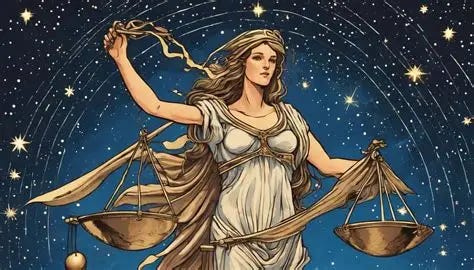
I did not love the myth for the leaving. I loved it for the part most people forget. Her return is the omen of a new Golden Age. The whole point of Astraea is that the door is still open. The star-maiden comes back when we become, again, the kind of people worth coming back to.
That is the thing I felt at that table by the window, eleven floors up, listening to a founder worry that the human touch was something we would have to fight for. He was right that we will have to fight for it. He was missing that the fight is already winnable, and already starting, in a thousand small and unglamorous ways.
I told him I think we are heading toward two things at once, and that we keep arguing as if we have to choose. Our homes and offices and restaurants will get more automated, more frictionless, more handled by machines. That is real. And right alongside it, in the same years, I think we are going to build a renaissance of spaces that exist for the opposite reason. Places designed to give us back the friction, the presence, the inconvenient and irreplaceable experience of other people.
The founder went quiet for a second. Then he said, “huh,” in the way people do when something reorganizes itself in their head. And I felt that small, private thrill I always feel when a reframe lands, when someone sees a thing they were sure they understood from a slightly different angle and cannot un-see it.
I do not have a tidy ending for this story, because the thing itself is not tidy. We are in the middle of it. Nobody knows yet which of these human spaces will turn out to be a fad and which will turn out to be the new cathedrals, the places a whole generation decides are sacred precisely because a machine cannot go there for you.
But I know which side of it I want to be standing on. The side that builds the rooms to be in. The side that takes being human seriously enough to defend it on purpose, out loud, with our time and our money and our attention. The side that keeps faith, the way the star-maiden did, and bets on the return.
That part, I think, is going to be beautiful.
Reveling in it,
Yen