
How to Become AI Proof
AI Is Getting Smarter. Here’s How to Stay Irreplaceable.

Feeling buried by the pace of AI change is normal. The better news is you don’t need to master coding or prompt engineering to stay valuable. The people thriving right now are doubling down on what machines still can’t replicate: clear thinking, sharp writing, and sound judgment when the path gets messy. Those skills travel with you no matter which tools evolve, and they compound over time.
Coding still matters, but it’s no longer rare. AI can now generate code, query data, and even build functional prototypes. Trying to out-automate machines at their own game is a losing bet. The real edge sits in the human layer, the one that decides what matters, why it matters, and how to move forward when the answer isn’t in the dataset.
Think in Systems
Clear thinking isn’t about being complicated. It’s about being precise. The best thinkers start by naming the real problem instead of reacting to symptoms. They surface the constraints that truly define their options such as time, budget, policy, or talent. Then they identify the single point that changes the most with the least effort.
People who think in systems can hear the signal through the noise. They connect cause and effect, anticipate the second-order impacts, and design solutions that don’t quietly break the next thing downstream. AI can help you scan the field of possibilities, but it will not choose your goals or your rules. That is on you.
A practical way to build this muscle is to treat your decision-making as a living map. Write down the core problem in one simple sentence that a new hire could understand. Note the key constraints that bind your choices. Then describe what happens if you pull the first lever: what changes immediately, and what shifts next. Keep that map close and update it as you learn. Over time, your choices become sharper and your explanations more trustworthy.
“AI can’t choose your goal or your rules. That’s still on you.”
Write Like a Human
We’ve entered the age of infinite average. Every AI tool can churn out something decent. The difference between average and irreplaceable now lives in how human your words feel.
Good writing doesn’t mean fancy phrasing or elaborate structure. It means clarity. It means showing your logic rather than your opinion. It means writing in a way that moves a decision forward. The best workplace writing frames the problem in plain language, explains the reasoning, and points to the next action.
Before sending anything that started with an AI draft, take a few seconds to make it your own. Replace generic filler with the specifics of your world with stories of real people, real constraints, and backed by real numbers. Add context the model could never know, such as your team’s bandwidth or the politics around a project. Make sure the note ends with an actual decision or next step.
When you write this way, you save time and signal confidence. In a remote, asynchronous world, clear writing is a leadership act. It cuts meetings, reduces confusion, and builds a written record your future self will thank you for.
“Clear writing is a leadership act. It saves meetings and builds trust.”
Decide in Messy Environments
The hardest part of work today isn’t lack of data. It’s the overload of it. Metrics collide, priorities shift weekly, and stakeholders pull in opposite directions. AI can surface patterns, but it can’t carry the risk that comes with making a real decision.
Decisive leaders accept that no choice will ever come with complete information. They say the tradeoffs out loud, which builds trust. They take one step at a time instead of chasing perfect plans. And they set checkpoints to revisit decisions once new data arrives.
A small decision protocol helps: take the smallest reversible action that still moves the work forward, write down the most realistic downside (not the dramatic one), and mark which areas need input, caution, or greenlight. You won’t freeze as often, and your team will learn to think more clearly when the map changes.
“The edge isn’t about knowing more. It’s about thinking better.”
Build Daily Habits That Compound
Thinking clearly, writing well, and deciding calmly aren’t abstract virtues. They’re skills that strengthen through repetition. Start small. At the end of each day, ask yourself three questions: -
Did I define the real problem before reacting?
Did I write something that clarified a decision for others?
Did I move one important task forward, even if just by an inch?
Each answer teaches you something about your process. Over time, those repetitions create judgment that compounds faster than any tool update.
Books That Strengthen Your Moats
If you want to grow stronger in the areas machines can’t reach, read intentionally. For systems thinking, Donella Meadows’ Thinking in Systems remains unmatched in teaching cause and effect. Peter Senge’s The Fifth Disciplineexplains how learning organizations actually function. Sönke Ahrens’ How to Take Smart Notes will make your ideas compound instead of scatter.
To sharpen your writing, read William Zinsser’s On Writing Well for clarity, Steven Pinker’s The Sense of Style for rhythm, and Ann Handley’s Everybody Writes for practical workplace application.
For decision-making under uncertainty, Daniel Kahneman’s Thinking, Fast and Slow helps you spot the mental shortcuts that cloud judgment. Philip Tetlock’s Superforecasting trains you to reason in probabilities. Rolf Dobelli’s The Art of Thinking Clearly provides a quick catalog of biases to avoid.
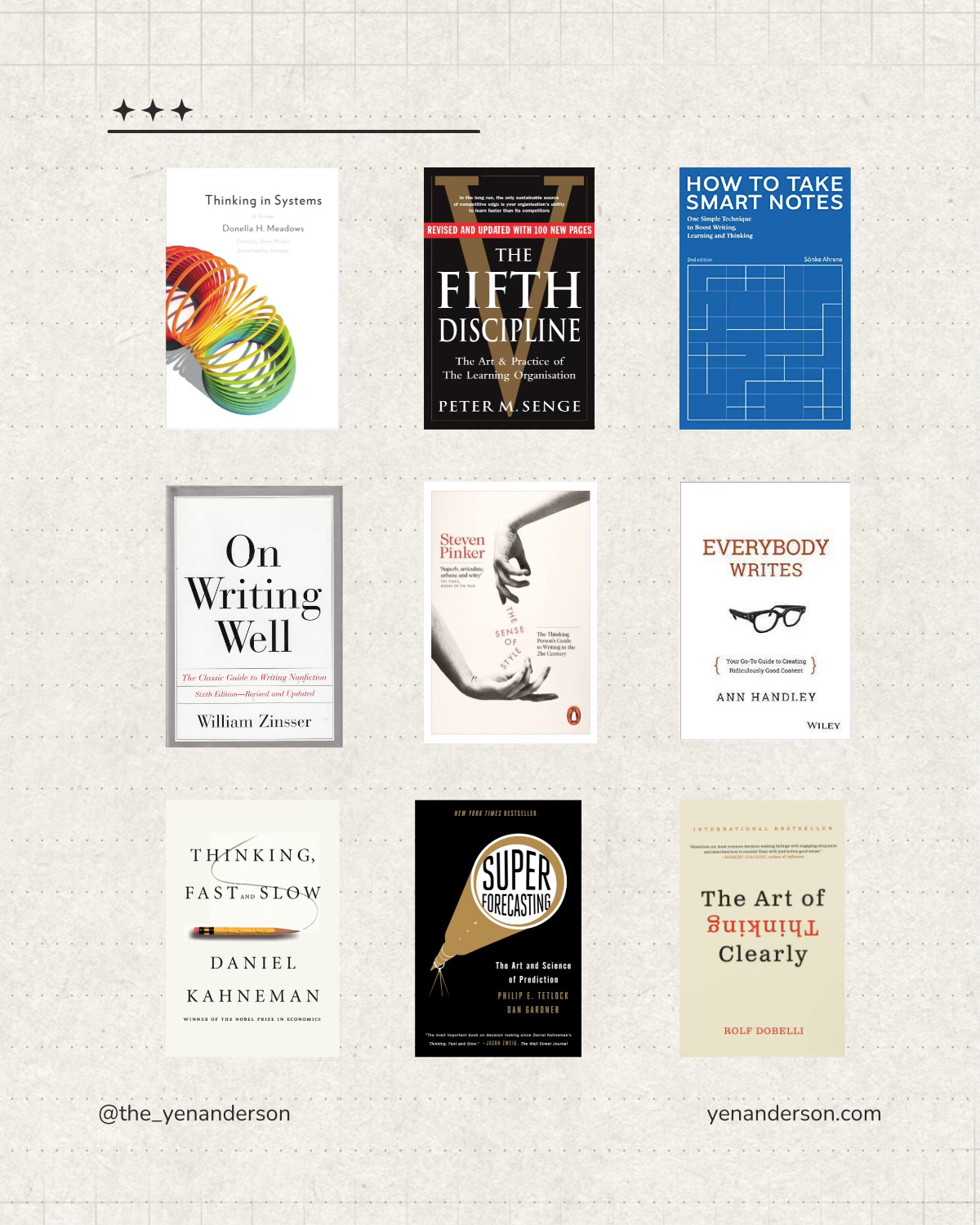
You don’t need to devour these books. Apply one lesson per chapter to your next memo or meeting. The compounding comes from use, not collection.
Why This Matters Now
AI isn’t erasing human value. It’s spotlighting it. The better machines get at average, the more obvious it becomes what only people can do: set direction, read the room, decide tradeoffs, tell the story, and design systems that actually work in the real world.
After years of coaching teams through the AI shift, I’ve learned that chasing every new tool burns energy. Building timeless habits with structured thinking, clean writing, and steady decisions creates range. That range lets you adapt to any new technology without losing your footing. It also turns AI into a multiplier for your judgment rather than a crutch for your uncertainty.
The Takeaway
You don’t need to learn to code to stay relevant. But you do need to build the habits that AI amplifies but can’t replace. Think in systems so you solve the right problem. Write with clarity so work moves forward without you in the room. Decide with composure so your team learns from your example.
That’s your moat. That’s how you stay valuable, no matter which tool arrives next.
Stay sharp,
Yen Anderson
@the_yenanderson